¶ Lifeboat Foundation InfoPreserver
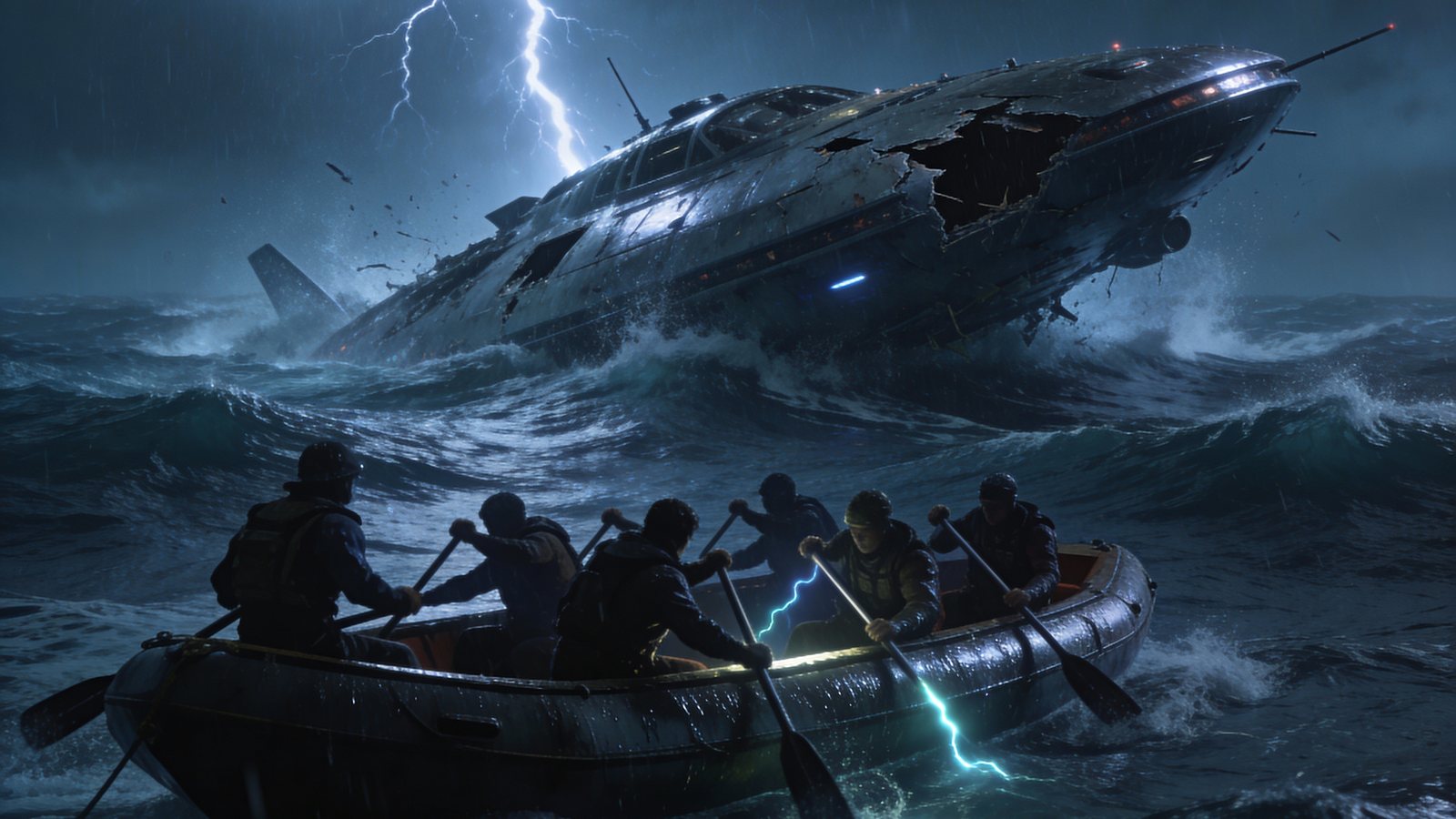
Welcome to the skills and knowledge repository of the Lifeboat Foundation. InfoPreserver exists to preserve practical capability: the knowledge people would need to stay alive, stabilize communities, rebuild local systems, restore infrastructure, and eventually recover advanced scientific and industrial capacity.
The project is not pessimistic by nature. The same knowledge that could shorten a civilization-wide rebuild can also help with local or regional disasters, remote settlements, off-planet colonization, resilient community planning, and sustainable practices that reduce risk before a crisis ever arrives. InfoPreserver is a recovery library, but it is also a practical library for anyone who wants important skills to remain usable, teachable, and locally available.
¶ Download The Repository
The main purpose of this wiki is to help people find and preserve the downloadable InfoPreserver repository. Start with the Start Here page to download the current full archive, verify its checksum, and learn how to apply periodic incremental releases. The repository archive is the durable copy to save, mirror, print, and carry forward.
¶ What InfoPreserver Preserves
InfoPreserver does not try to preserve every document, every technology, or every achievement of modern life. It emphasizes recoverability. A useful source in this library should help someone do, teach, maintain, repair, reproduce, or understand something important under real constraints.
The project overview describes this as capability over comprehensiveness. The guiding question is:
Given the state a society has fallen to, what knowledge is actionable now, and what knowledge enables the next step up?
That question shapes the whole repository. Documents are favored when they are practical, printable, legally usable, technically reliable, and likely to remain helpful when institutions, supply chains, communications, expert networks, or electrical systems are damaged or unavailable.
¶ How The Library Is Organized
InfoPreserver uses the Rebuild Ladder, a capability-based structure from A0 to A5. The ladder is not a timeline, and it is not a ranking of importance. A document is placed at the lowest level where it becomes genuinely useful.
- Start Here: orientation material, visual guides, professional pipeline maps, and editorial navigation for the repository.
- A0 - Survival Baseline: immediate survival knowledge, including water, fire, shelter, food, first aid, sanitation, signaling, hazard recognition, and basic protection.
- A1 - Stabilized Community: repeatable local living, including agriculture, food preservation, community health, repair, education, workshop routines, local governance, and household or village-scale systems.
- A2 - Industrial Seed: the bootstrap layer, including power, materials, machine tools, chemistry, communications, transport, measurement, and the methods needed to make and maintain more complex systems.
- A3 - Infrastructure Recovery: larger coordinated systems, including regional utilities, transport networks, public health, civil works, manufacturing chains, standards, and institutions that scale beyond one settlement.
- A4 - Advanced Industry and Science: high-precision capability, including advanced medicine, electronics, computation, instrumentation, aerospace, optimization, and research systems that depend on many supporting layers.
- A5 - Leapfrogs and Frontier: high-dependency and frontier knowledge preserved for future societies that may adapt advanced methods faster than expected.
Start with the level that matches the real situation, not the topic that sounds most advanced. If people lack safe water, calories, shelter, sanitation, or basic medical care, A0 and A1 knowledge matter first. If a community can survive but cannot make tools, power, materials, or replacement parts, A2 becomes the hinge point.
¶ Digital And Hardcopy Resilience
InfoPreserver is designed to be copied, shared, printed, and stewarded by many independent groups. The core repository favors PDF documents because PDFs are printable, portable, widely readable, and suitable for both digital storage and hardcopy preservation.
The digital library is intended to be downloadable as a full archive, with periodic incremental ZIP files after launch. This allows stewards to keep complete local copies and update them without depending on continuous access to the live site. The wiki provides navigation, context, review structure, and readable introductions; the files remain the durable source library.
The broader preservation model imagines independent steward nodes, or infosteries. An infostery may keep the repository digitally, in print, or in both forms. Some may preserve the entire collection. Others may prioritize critical subsets for their region, risk profile, language, equipment, or available storage. This variety is part of the resilience strategy: knowledge loss should be local, not global.
¶ Culture, Training, And Use
InfoPreserver preserves the enabling knowledge of culture rather than prescribing cultural outcomes. People with tools, materials, memory, education, health, security, and time will create culture for themselves. The library therefore includes practical arts, media methods, education, recordkeeping, governance, psychology, and social cohesion where those topics help communities remain human, functional, and teachable.
Readers should treat folder pages as orientation pages before opening detailed documents. Each page explains the topic, why it matters, and how it fits the larger recovery structure. Some folders already contain local PDFs. Others are planned pages that mark knowledge the library expects to preserve as new submissions arrive.
Contributors should place documents in the most specific folder that fits, using the lowest A-level where the information becomes actionable. If a document helps across several levels or subjects, choose one primary home and preserve the cross-domain value through links, tags, notes, or future indexes.
¶ What Belongs Here
Good candidates include public domain works, openly licensed PDFs, government manuals, university extension publications, technical primers, repair guides, field manuals, standards summaries, and printable educational materials. The strongest sources explain how to do something, how to teach something, how to maintain a system, or how to move from one capability level to the next.
Please avoid unstable web-only pages, promotional material, unprintable media, and files with unclear reuse rights. Human review remains central. Automation can help find candidates, extract metadata, flag rights issues, and suggest placement, but final inclusion and classification should be made by human editors.
¶ Project References
- InfoPreserver program page
- InfoPreserver: Project Overview
- A Tetrahedral Model of Civilizational Recovery Dynamics for InfoPreserver
- InfoPreserver ontology review
¶ Current Status
This Wiki.js library is the working public structure for InfoPreserver v1.8. It includes folder-level topic pages, a proposed A0-A5 taxonomy, local PDFs where available, and planned pages for future documents and categories. The repository is expected to grow as new usable, rights-cleared materials are reviewed and added.